Let’s do something a little bit different today. Previously, we took a close look at a self-portrait by Rembrandt. Today, I want to paint along with that painting. I want to study it, but I want to study it by painting. in a sense, in the way that he painted. I don’t wanna mimic the painting. I don’t wanna try and study exactly what he did. What I want to do is take what we learned by analyzing that painting, and I want to do some very simple painting to go along with it.
This is not really a blog about painting, in a sense. We are going to paint, but we’re going to do some very simple paintings, little studies, to better understand what Rembrandt was doing.
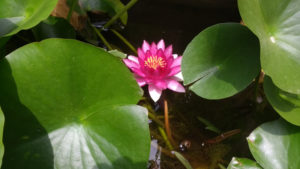
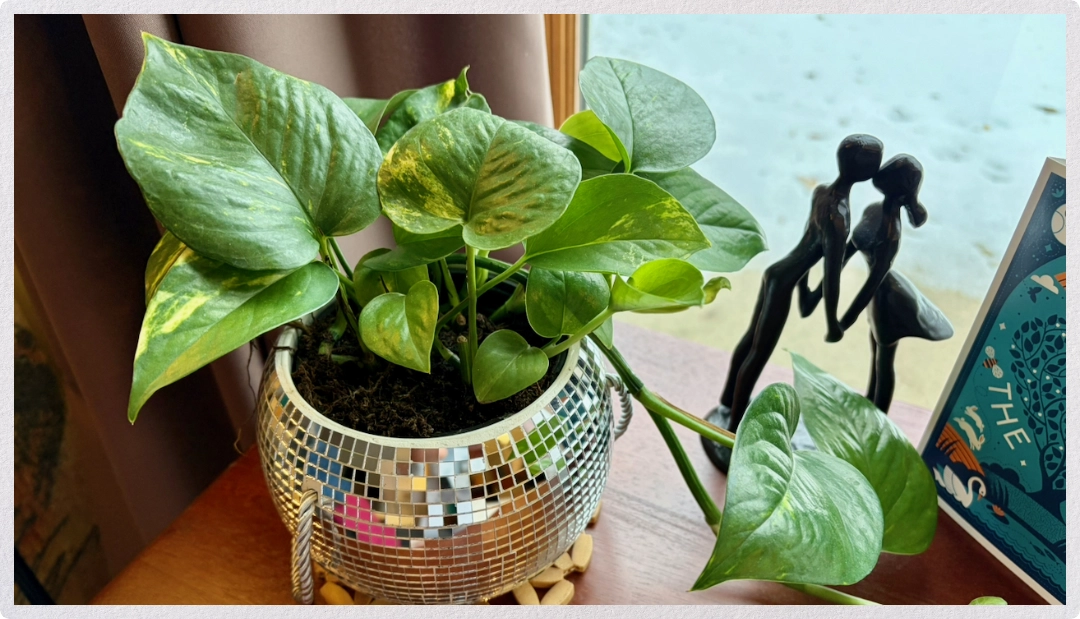
To do this, we’re going to choose a very simple household object, something that’s easily accessible. We could choose something like a cup or a coffee mug and it would work fine. But I think if we choose a beautiful house plant, like we have here, it gives us a little bit more life. There’s subtle things happening and ways that we can play a little bit. We’re going to paint only one leaf out of this beautiful plant, and that’s enough. That will give us the model and the understanding that we need. It will allow us to look clearly without overwhelming us with so much detail that we spend our time in all the different details, instead of spending our time focused on the one thing that we really want to learn.
Insertion Transition
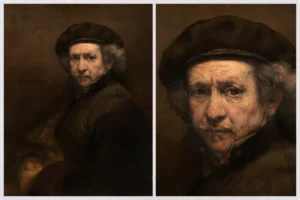
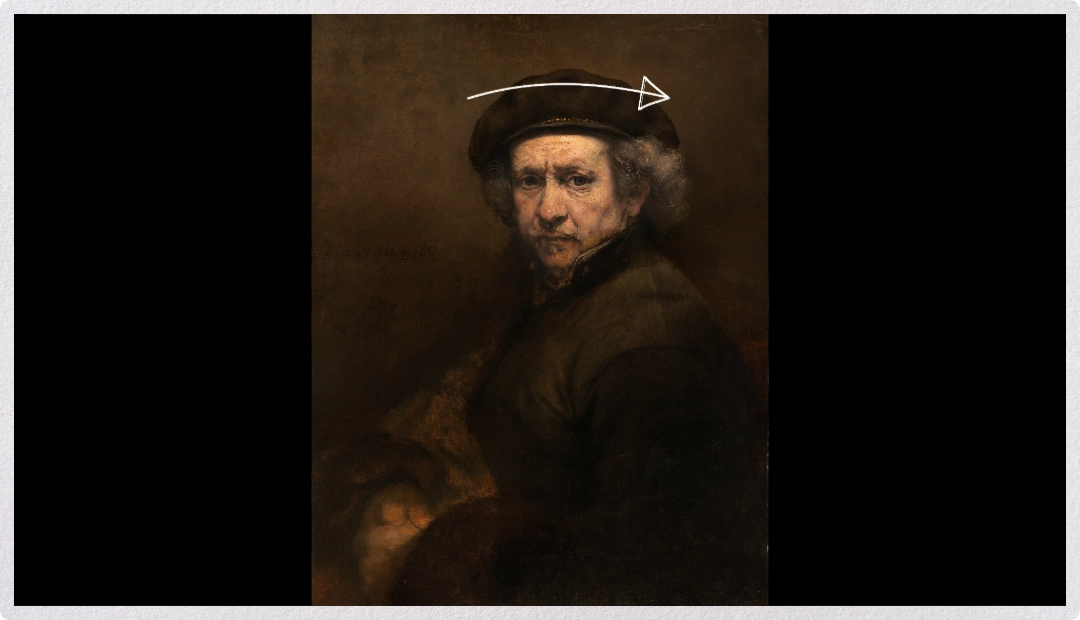
When we looked at the self portrait by Rembrandt, we looked at three value transitions. One of them was called the Insertion Transition. This one is a little surprising, as we are inserting a value in between that sequence. So instead of going from light medium to dark, we might go from light dark medium or dark light medium. We can see that towards the top of the painting with the hat where we go from the dark hat to a light value and then a medium value on top of that.
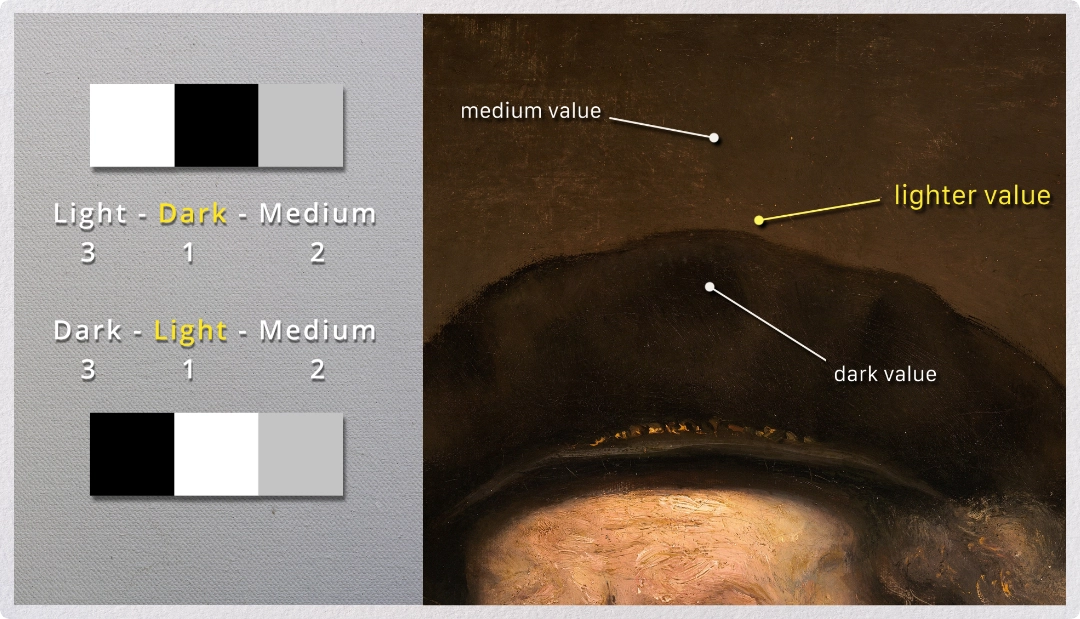
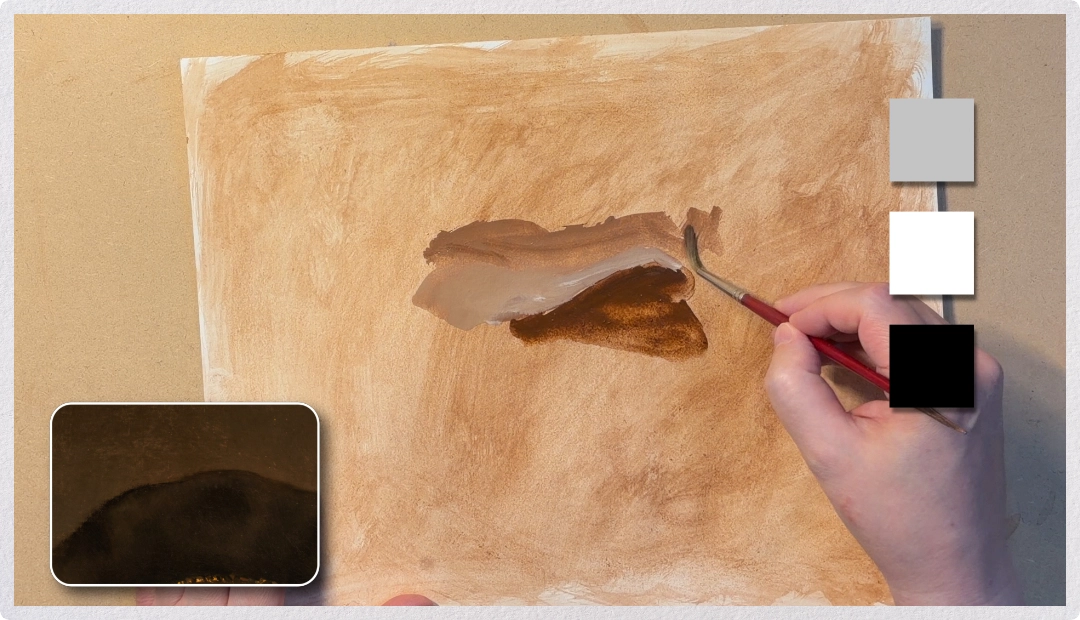
We can see in the painting that we are very loosely laying in one leaf. I’m going to add this lighter color in above the leaf, the insertion, and then the darker, medium color on top of that. Thus we go from dark to light to medium, as we said before. I don’t want it to be too much of a distinct break, I want to have a somewhat softer transition between the light and medium areas. We can see in Rembrandt’s painting that above that hat the lighter and the medium value softly go from one to the other. It’s not a big, huge, readily apparent difference. Over the course of working on this leaf, I went back and made the insertion lighter, more exaggerated than in Rembrandt’s painting. This was done in order to be able to emphasize it and see it more clearly, for the purpose of better understanding Rembrandt’s value transitions. Later I might do some more subtle versions, but to begin with, I want it to be a little clearer.
As we see in Rembrandt’s painting, we go from the hat which is dark, to this area right above, which is lighter, and then the area above that, which is mediums. So dark to light to medium. That light might be subtle, but when you see this painting, especially when you see it in person, even if you don’t know that this is happening, you can feel it. You can feel this movement, this light, that’s moving across the painting and inserting itself in there and giving a movement. It changes the space of the work. It takes us away from a flat static movement, from a fixed idea of a self-portrait. Self-portraits can feel quite static, as you are sitting there looking straight at the viewer. Instead Rembrandt is moving us all around, moving us through the space. We will talk about this more in the future as this is very important.
Lost Edges Hesitation
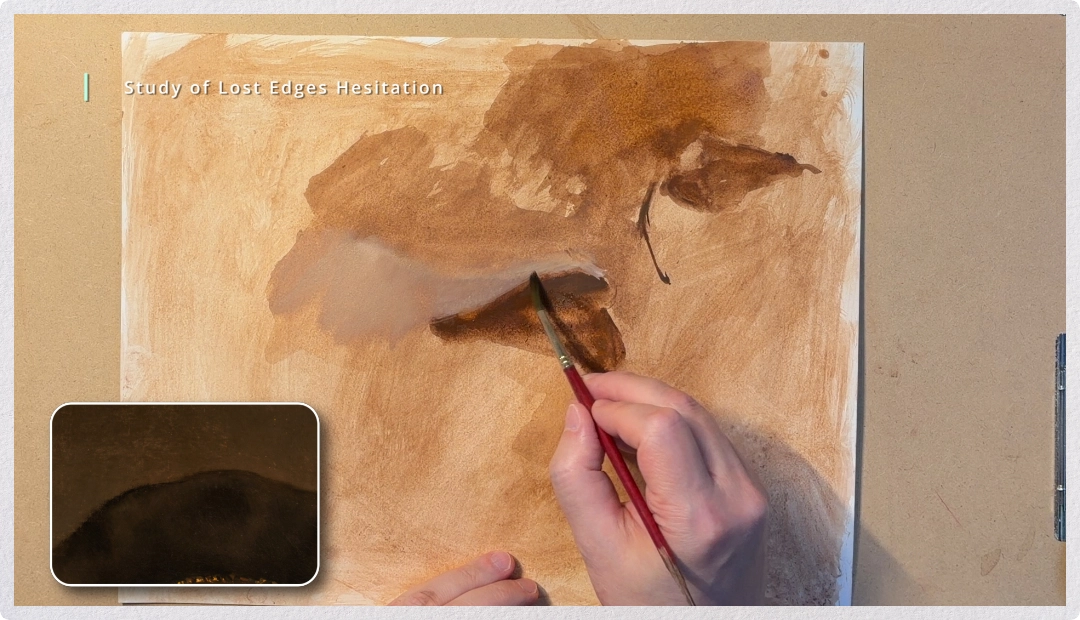
In Rembrandt’s self-portrait, we also see something called the Lost Edges Hesitation. This is an interesting movement. We can see the coat and the background which are both dark values and he makes the edge very soft, almost blending them together. But they don’t completely become one. Instead, we hesitate a little bit. He causes us to hesitate by bringing in a slightly lighter value. In this way, we don’t instantly blend the two areas in to one, instead, we still see the shape of the coat clearly against the background. This way we don’t completely lose the coat into the background, and he is still preserving that shape.
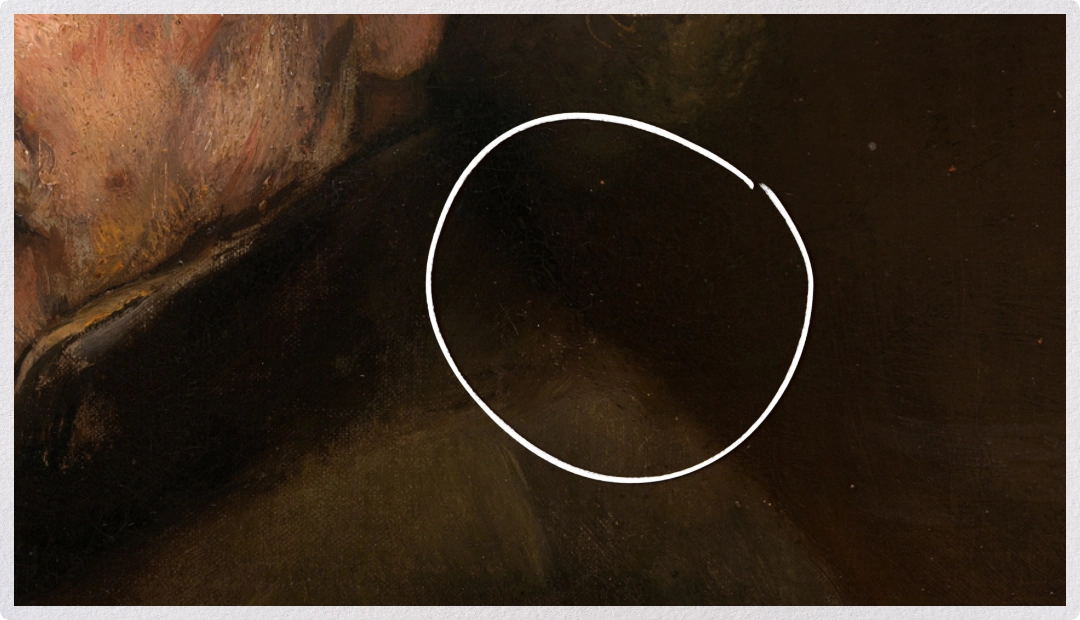
As we paint this plant leaf, we’re going to merge the plant into the background, but we’re going to bring in just enough of a slightly lighter value that we still preserve the shape of the leaf. I’m starting with a somewhat darker color. and I’m going to add in a light color. With the idea of a lost value hesitation, we want two dark areas, but we also want a slightly lighter area so we keep a sense of the shape of the leaf, and don’t lose it into the background.
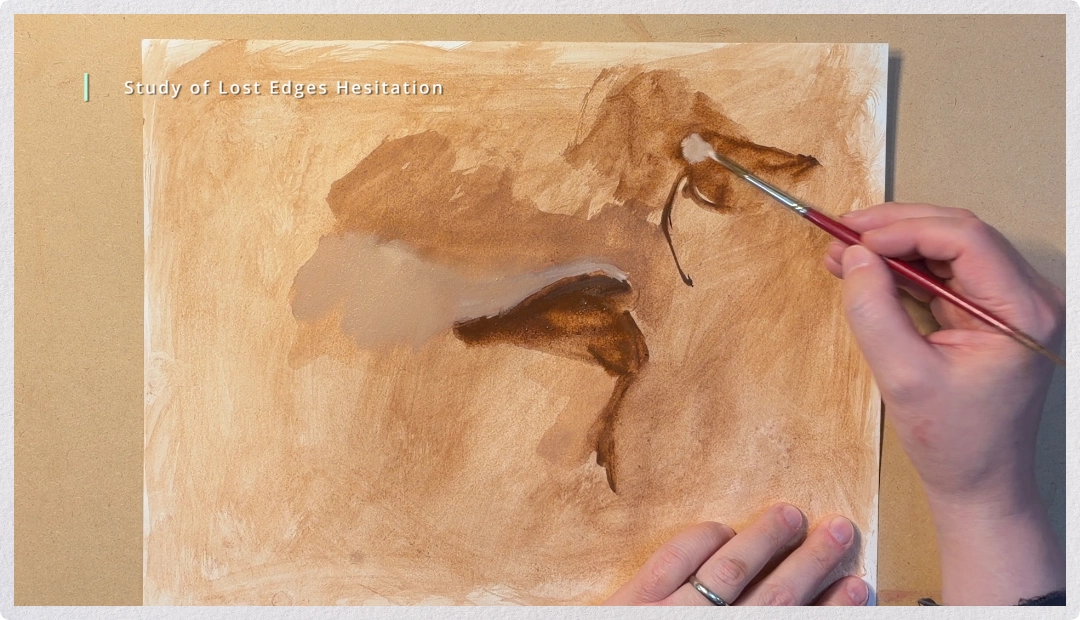
This way we preserve the sense of the leaf. But we still allow it to merge into the background and give that softness, that subtlety, and that expansiveness even. we can see the leaf clearly, even though one edge is softly fading into the other edge. That is, the leaf is softly blending in with the background.
We’ve made the leaf very dark and we’re making the background dark. But we still want to preserve the shape the sense of that leaf so we don’t just lose it into the background. We want to soften the edges so that the leaf and the background almost become one. In some ways can become one, which can actually make the leaf feel even larger, making it fill the space. But, we still want to make it clear what the leaf is. If we just make the leaf and the background one, then we lose the sense of the leaf completely.
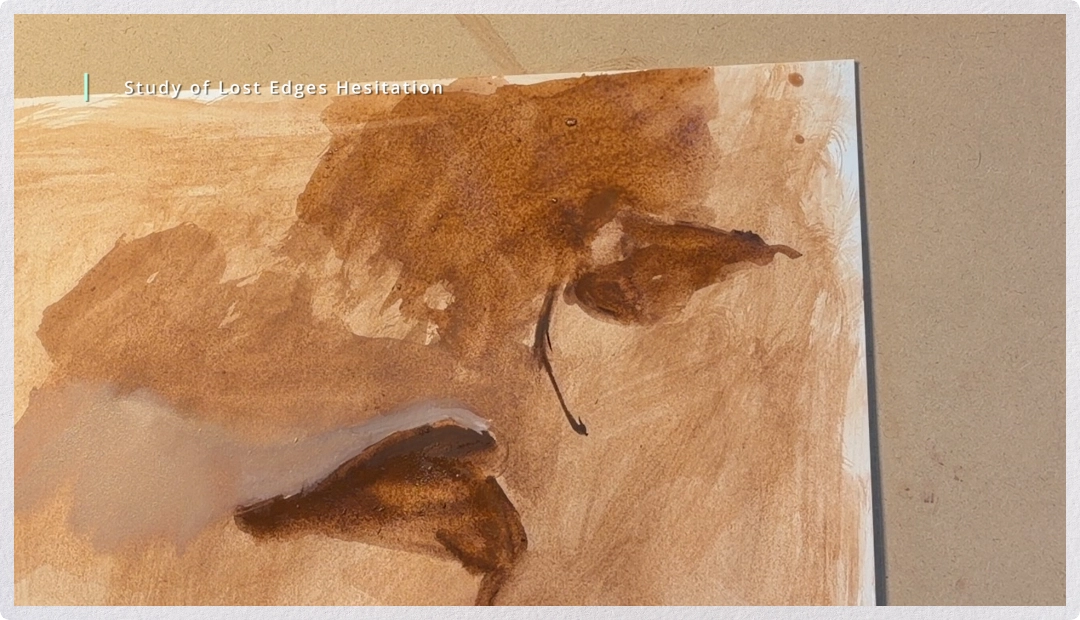
We can even take the back of the paintbrush here and draw lightly into the leaf. Creating a soft line to give it just a little bit of clarity. We can see that Rembrandt does something like this as well. He often, you could say, carves very lightly into the paint. So he’s creating these little marks, working the surface a little bit. So even though we have, again, these two edges that are blending into each other, I can just use subtle techniques to give it a little clarity.
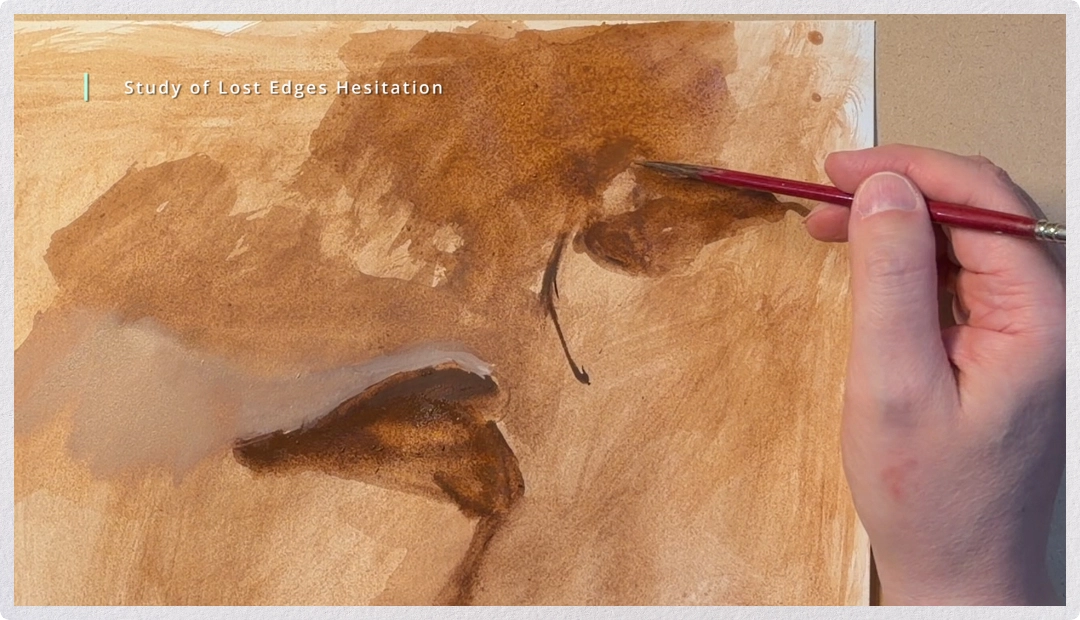
I’m just going back to the first leaf with the Insertion Transition a little bit. To me, the edge is just a little bit hard, so I want to soften it a little bit. I actually want to make it a little darker to have it clear but also soften just a little bit the transition from that light area to the medium area just above it.
Egg
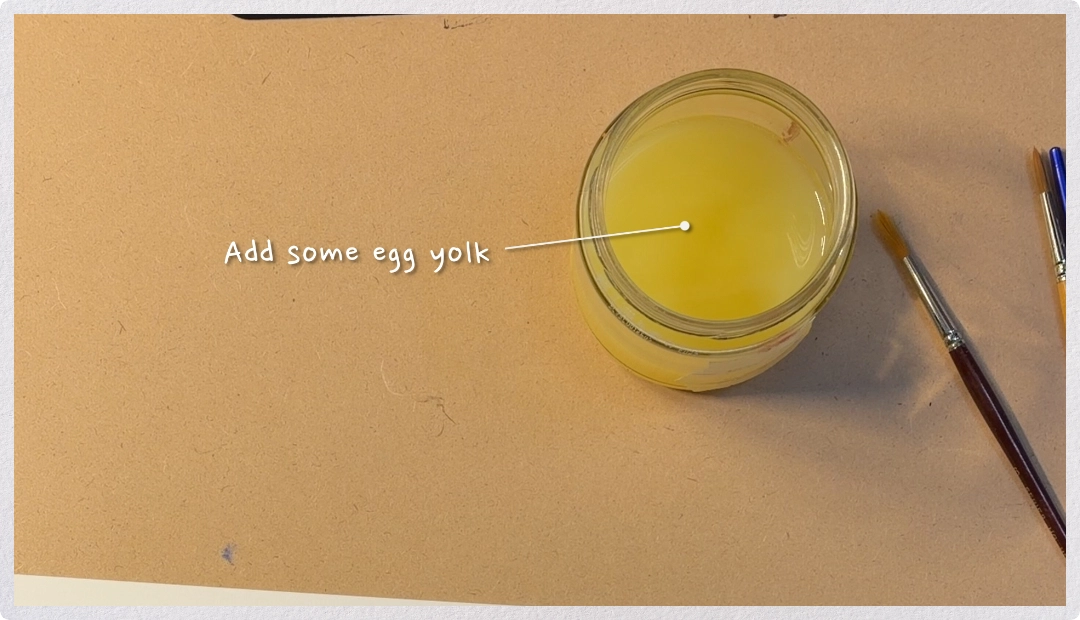
Usually with gouache, we use water to thin out the paint and make it flow a little bit better or make it a little bit more transparent. One thing that I do that’s maybe a little bit unusual is I don’t use just water. I have just a little bit of egg in my water. I do that because it can make it feel just a little bit more like oil painting. It makes it hold just a little better, the brush strokes on the paper will hold just a little better. In fact sometimes I will even add just a touch of oil in there, just a touch, though I didn’t do that today. Today I only added one egg yolk in the water. I think this might be and eight-to-one or ten-to-one ratio, I actually forget exactly how much I used. In the future I will write more about using egg in our paintings, with both gouache, as well as oil paint.
Sequential Transition
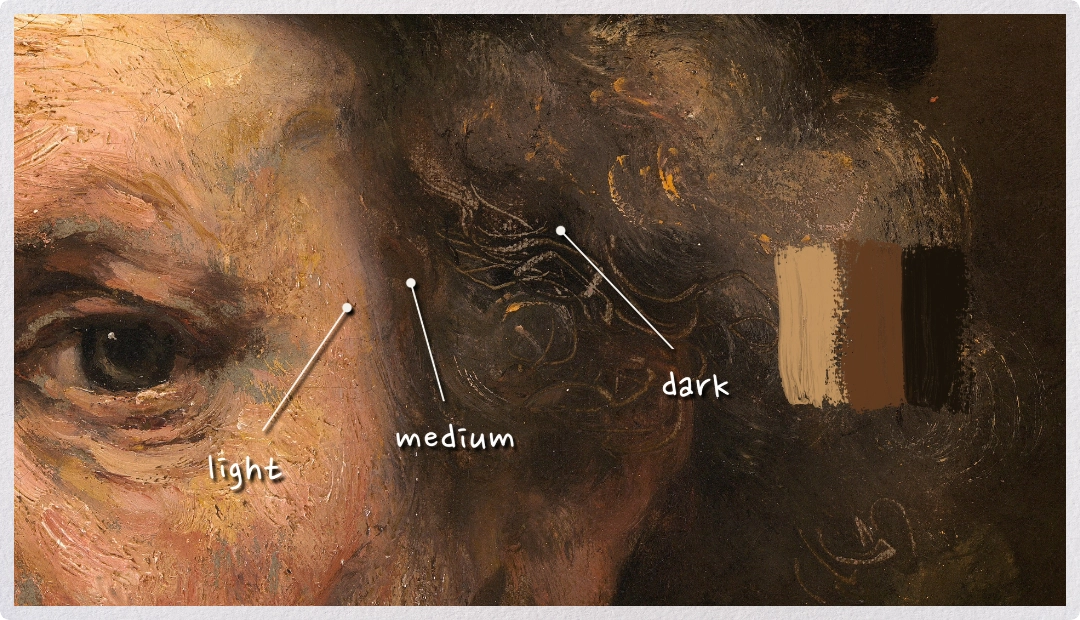
Even though we were looking at it last here, in the original blog post on Rembrandt, the first transition we looked at was the Sequential Transition. And this is maybe what we might think of as the most basic value transition. One, two, three: from light to medium to dark, or from dark to medium to light. A nice value transition going in order. And we can see this in numerous parts of the painting. In particular here, we can see it from going from the face into the shadow of the face right as we enter into the hair and then in the hair where it gets darker. So we go from light to medium to dark.
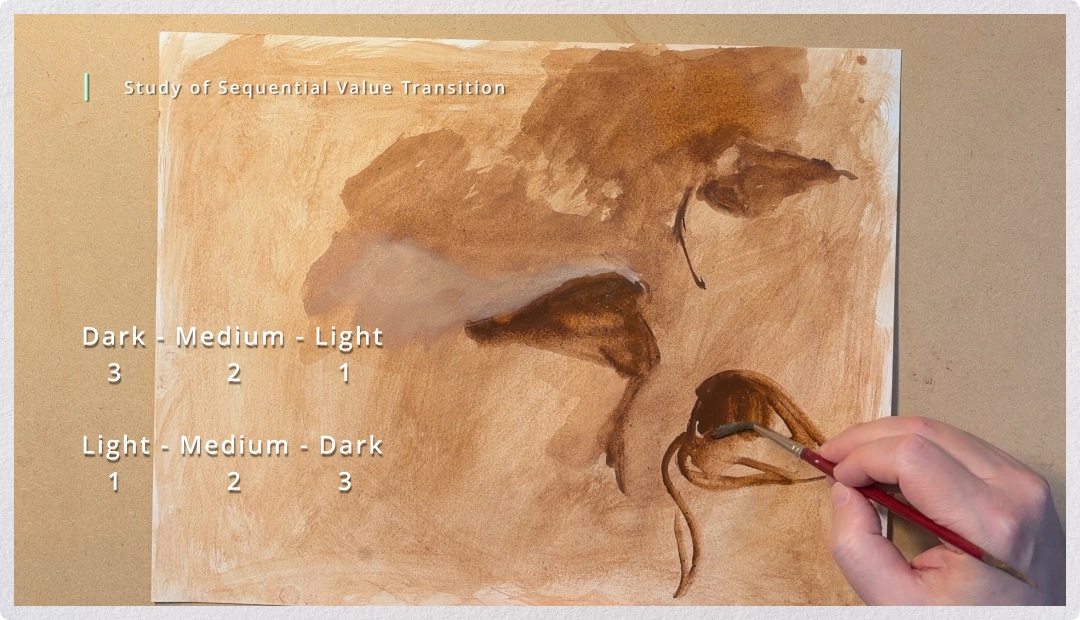
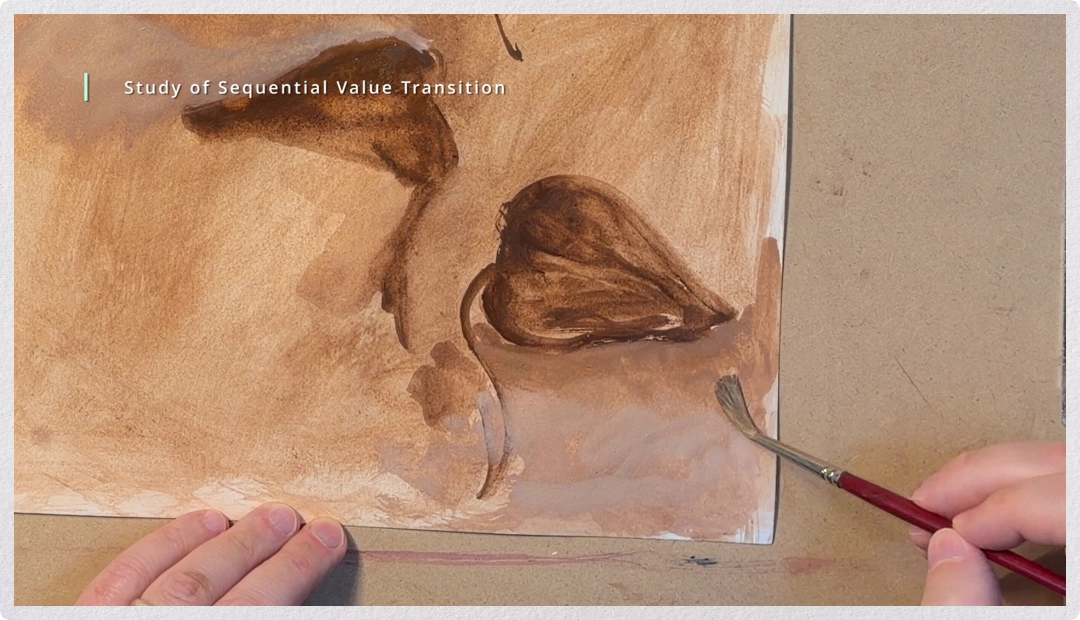
Let’s add in our third leaf right down here in the corner. This will be the sequential transition, and again we are just kind of playfully placing it in. The idea of this is not to create a big painting. The idea of this is to make little studies that help us understand and help us see better. The sequential transition is maybe a little more straightforward in the sense of going from dark to medium to light or light, medium to dark, everything in order in a sequence. One, two, three; three, two, one.
I think, playing with these ideas, taking a little bit of paint and playing with it with a simple, model of our leaf we can see for ourselves what Rembrandt is doing. I can talk about these ideas, as I did in the previous blog, and we can go to the museum and we can look at them, but actually painting them, actually doing it, we can really see it so much more clearly. To do this we don’t have to choose a complicated subject. In fact, we don’t have to paint an object at all, we can paint a square with a few little lines. We don’t have to make this complicated in order to help us see better what Rembrandt was doing. But by applying it and actually putting that in paint for ourselves, right in front of ourselves on paper, I think we can really see it so much more clearly.
So we started with a darker color for the leaf, then we added a medium tone underneath that, and underneath all of that, we add in our lighter tone. This sequential transition is actually very nice, very beautiful. It really brings this leaf to life. It gives it a bit of a platform. the light is rising up. We have this light underneath and it slowly becomes darker. but at the same time, the leaf is slowly emerging and standing out from this lighter area to the medium, with the contrast of that dark leaf against these other medium and light value areas.
Comparing Three Transitions
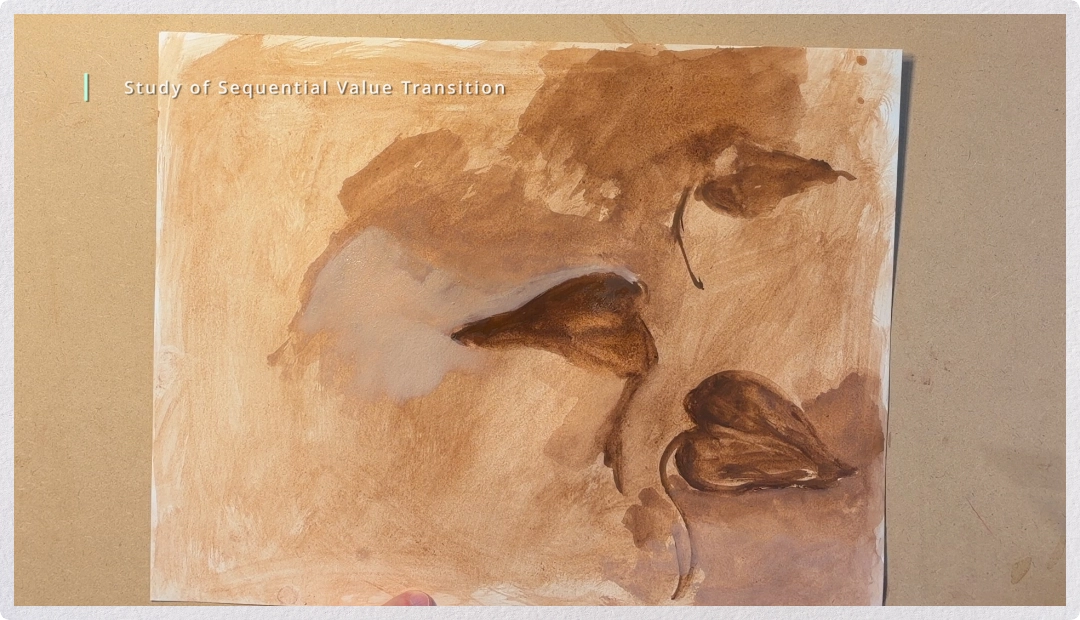
And as we paint this. we can notice the difference between the sequential transition with the dark leaf versus the medium tone, as compared to the other two transitions. With the lost value hesitation, where the two areas are merging together or the insertion transition where we have this dark leaf and suddenly we have a light area and then the medium. It gives a very different feel. With the insertion transition, that leaf really stands out and there’s this light movement around it, almost like a halo. With the lost value transition, it’s this softness that merges the leaf and the background. But here with this sequential transition, we have a nice darker leaf standing clearly and simply in front of this medium color, medium value background.
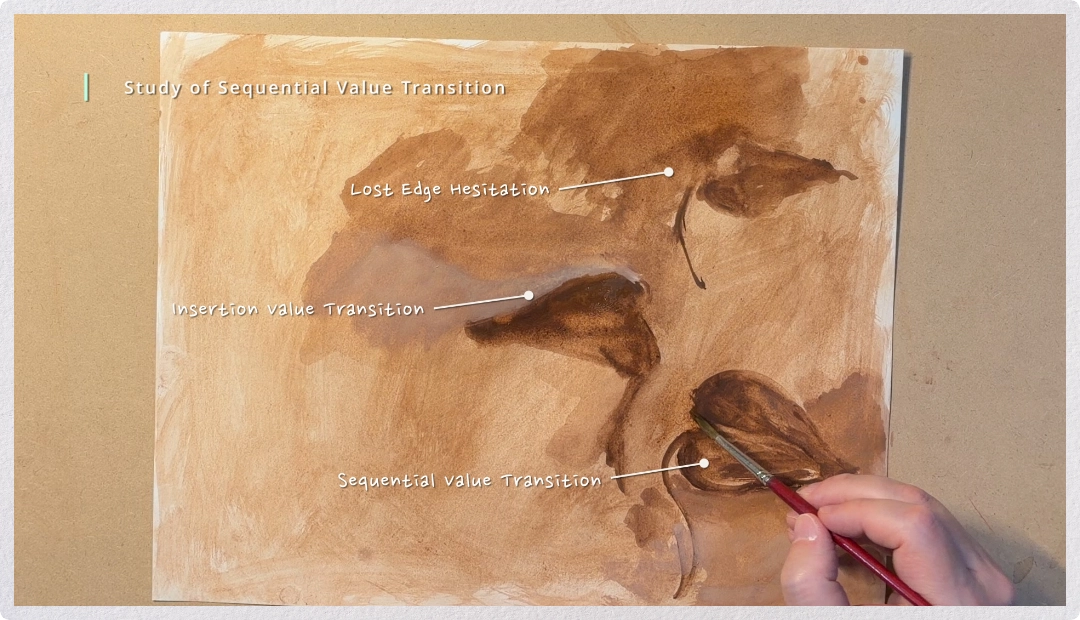
I will go back in and play with this leaf just a little bit. Really, I’m just finishing up. Little tidbits that I feel like I want to change a little maybe. I want to clarify this leaf a little bit, clarify the distinction between the medium and light area, but at the same time I also want to keep it soft, and make sure that the edges are not too crisp or harsh. I will also bring in a bit of light underneath the leaf as well. This is different than what we saw with Rembrandt. But by bringing that light value a little bit underneath the leaf as well, right around that edge, it helps it to stand out more.
Learning to Learn
One of the most exciting things about this is that we were able to do that by ourselves in our own little studies. We can see that we can do this, which is pretty cool. When you look at a masterpiece, you think, how does the artist do all this? And we start to realize that we can do different parts of it, and that’s wonderful. I think that’s a great feeling.
Connecting with the artist
It also connects us more with the artist. It helps us understand more and see better what they’re doing. And so in our own little studies, as we’re painting with them, we can see a little bit how this works, and we can even play with it and change it.
These ideas can seem a little abstract. But when we’re taking our paint and we’re playing with them and we’re doing that for ourselves, it’s no longer abstract. It’s clear, it’s something real that we’re doing right in front of ourselves, for ourselves. And I think that’s a really wonderful opportunity.
Not worried about details
As I paint these studies I’m not even looking very closely to try and get an exact match of what I’m painting and how the leaf works. I’m just kind of laying them in there, playing with them, and I’m not worried about anything. I’m not worried about the exact details, or the exact dimensions as a leaf. I’m trying to study this idea of value transitions, that’s my goal. Everything else is something for me to play with, something for me to enjoy, but not something for me to stress about.
Focus on one thing
We want to do these studies in a simple way, even if we have the ability to do it in a very complex way. We want to do it in a simple way so that we can break it down and see clearly this one aspect, this one thing that we are studying. We don’t want to try and study 10 things at once. We can’t, we can’t take that much in at one time. Here we looked one three things, three little parts, three aspects of one thing. We looked at them clearly, closely and separately from everything else and I think it gives us the opportunity to really understand them well.